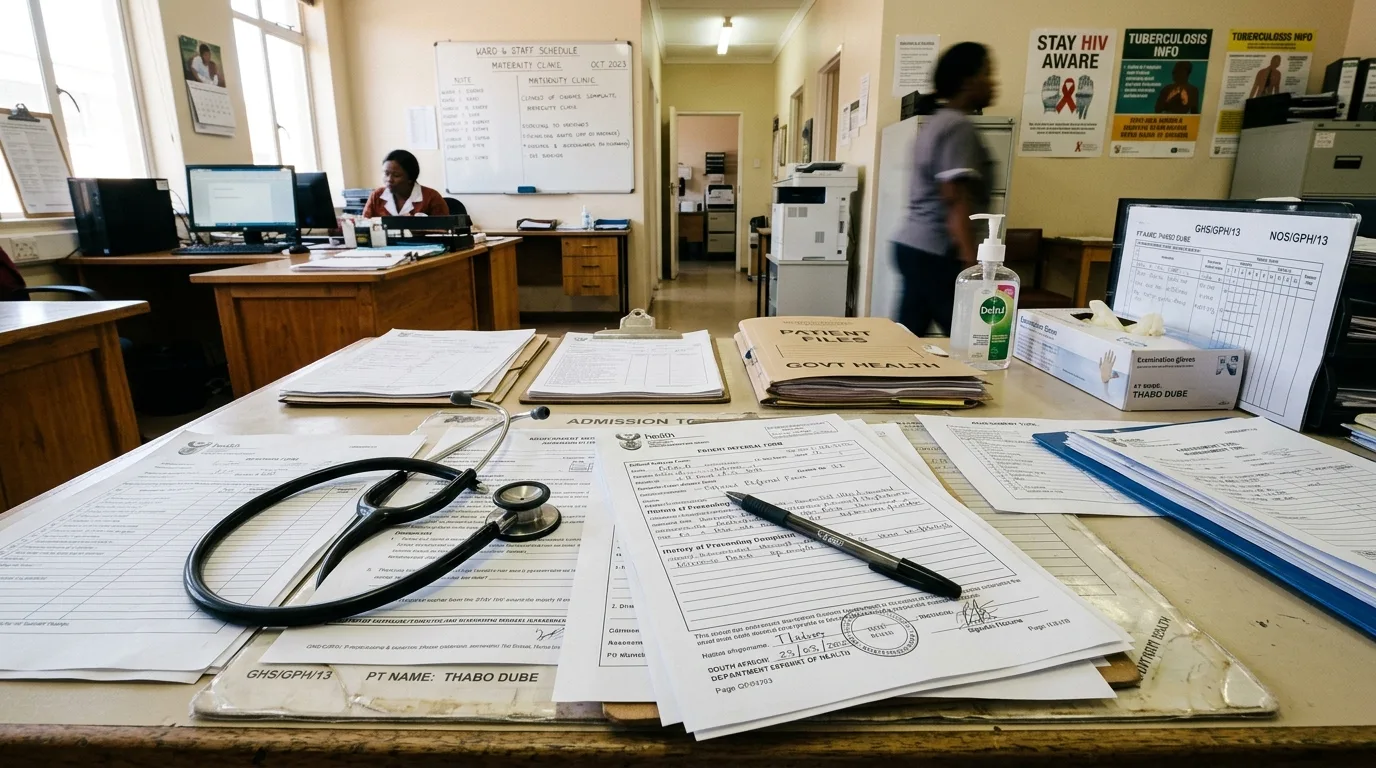
The SASSA disability grant provides R2,400 per month to South Africans who cannot work due to a medical condition. But getting approved is not straightforward. Unlike the Child Support Grant or the Older Person's Grant, the disability grant requires a formal medical assessment by a government-appointed doctor. This single appointment determines whether your application succeeds or fails.
Many applicants walk into the assessment unprepared. They assume their diagnosis alone will be enough, or they forget to bring critical documents. The result is a rejection that could have been avoided. This guide walks you through every stage of the disability grant process in 2026, from eligibility requirements to the assessment itself to what happens if you need to appeal.
Who Qualifies for the Disability Grant
Before you apply, you need to confirm that you meet SASSA's eligibility requirements. The disability grant is means-tested, which means your income and assets are evaluated alongside your medical condition. Meeting the medical criteria alone is not sufficient if your financial situation exceeds the thresholds.
To qualify in 2026, you must be a South African citizen or permanent resident between the ages of 18 and 59. You must have a physical or mental disability that renders you unable to work for a continuous period of at least 6 months. The means test requires that a single person earns below R7,710 per month or holds assets valued below R1,227,600. For married couples, these thresholds are doubled.
If you are over 59, you do not apply for the disability grant. Instead, you qualify for the Older Person's Grant, which does not require a medical assessment. If you are under 18, a parent or caregiver may apply for the Care Dependency Grant on your behalf. The disability grant specifically targets working-age adults whose medical conditions prevent employment. For a full breakdown of all eligibility criteria, visit our disability grant eligibility page.
The Application Process Before the Assessment
The application process begins at your nearest SASSA office. You cannot apply online for the disability grant. You need to visit in person, and it is worth arriving early because queues at most offices start forming well before the doors open at 08:00. Bring all your documents on the first visit to avoid having to return.
At the office, a SASSA official will help you complete Form 1 (the disability grant application form). You will provide your personal details, employment history, and information about your medical condition. The official will also conduct the means test on the spot, verifying your income and assets against the thresholds. Once your application is accepted for processing, SASSA will book your medical assessment date, which is typically 2 to 4 weeks after the application date.
Documents Checklist for Your SASSA Visit
- South African ID document (original and certified copy)
- Proof of residential address (utility bill, affidavit, or municipal account)
- Proof of income or a sworn statement if unemployed
- Latest 3 months of bank statements (all accounts)
- Medical records, specialist reports, and hospital discharge summaries
- Proof of marriage or divorce (if applicable)
- Any existing medical prescriptions or chronic medication lists
Make certified copies of every document before your visit. SASSA offices do not make copies for you, and if you only bring originals, you will be sent away. Certification can be done at any South African Police Service station free of charge. Keep the originals safe - you will need them again at the medical assessment.
What Happens During the Medical Assessment
The medical assessment is the most important step in the entire process. It is conducted by a government-appointed medical professional - not your personal doctor or specialist. SASSA contracts independent doctors to perform these assessments specifically to maintain objectivity. This means the doctor who examines you will likely be meeting you for the first time and will rely heavily on the documentation you provide.
The assessment itself typically takes between 30 and 60 minutes. The doctor will review your medical history, examine you physically or mentally (depending on the nature of your condition), and evaluate how your condition affects your ability to perform work. This last point is critical: the assessment is not about confirming your diagnosis. It is about determining whether your condition prevents you from earning a living. A person with a confirmed diagnosis of a chronic illness can still be declined if the doctor concludes that the condition is manageable enough to allow some form of employment.
During the examination, the doctor evaluates several specific categories of functional ability. Each category is scored and contributes to the overall determination of whether you qualify for a temporary or permanent grant.
| Assessment Category | What the Doctor Evaluates |
|---|---|
| Physical Mobility | Can you stand, walk, sit, and move around for sustained periods? Do you need mobility aids? |
| Cognitive Function | Can you concentrate, follow instructions, and make decisions needed for workplace tasks? |
| Sensory Capacity | Is your vision and hearing sufficient for a working environment? Do you need assistive devices? |
| Stamina and Endurance | Can you sustain activity for a full work day (8 hours), or do you fatigue rapidly? |
| Medication Needs | Does your treatment schedule, side effects, or required rest periods interfere with regular employment? |
After the examination, the doctor completes a medical report that is submitted directly to SASSA. You do not receive a copy of this report at the time. The report includes a recommendation: approve for a temporary grant, approve for a permanent grant, or decline. SASSA's adjudication panel then reviews the report alongside your application to make the final decision, which you will receive by post or SMS within 4 to 8 weeks.
Temporary vs Permanent Disability Grants
One of the most common misconceptions about the disability grant is that it is a permanent benefit. In reality, the vast majority of disability grants issued in South Africa are temporary. A temporary grant is approved for a fixed period - usually 6 or 12 months - after which you must undergo another medical assessment to determine whether you still qualify. Only conditions deemed completely irreversible qualify for a permanent grant.
Permanent grants are reserved for conditions where there is no reasonable medical expectation of improvement. Examples include complete spinal cord injuries resulting in paralysis, advanced degenerative diseases, severe intellectual disabilities, and bilateral amputations. If there is any possibility that treatment, rehabilitation, or surgery could restore your ability to work, SASSA will issue a temporary grant instead. This applies even to serious conditions like cancer, HIV/AIDS, and major organ diseases, where treatment outcomes can vary.
The current disability grant amount is R2,400 per month for both temporary and permanent grants. There is no difference in the monthly payment - only in whether you need to be reassessed. If you hold a temporary grant, it is essential that you begin the renewal process well before your grant expires. SASSA recommends starting the renewal application at least 3 months before the expiry date to avoid any gap in payments.
Set a Calendar Reminder for Your Renewal
If you receive a temporary disability grant, mark the expiry date in your phone or calendar immediately. Start the renewal process 3 months before the grant expires. Late renewals can result in a gap of 2–3 months without income while your reassessment is processed. SASSA does not send reminders, so the responsibility falls entirely on you.
Why Applications Get Rejected
Understanding why disability grant applications fail can help you avoid the most common pitfalls. The rejection rate for disability grants is significantly higher than for other SASSA grants, and the medical assessment is where most applications fall apart. Knowing the typical reasons for rejection allows you to prepare properly and present the strongest possible case.
The most frequent reason for rejection is insufficient medical evidence. Many applicants arrive at the assessment with nothing more than a letter from their GP. A GP letter alone is rarely enough. SASSA's medical assessors want to see specialist referrals, diagnostic test results (X-rays, MRIs, blood panels), hospital admission records, and discharge summaries. The more documentation you provide, the harder it is for the assessor to conclude that your condition is not severe enough to prevent work.
The second common reason is that the condition is deemed manageable with treatment. If you have a chronic illness that responds well to medication, the assessor may determine that you can still work as long as you continue your treatment. This is especially common with conditions like diabetes, hypertension, epilepsy, and mental health disorders. To counter this, bring documentation showing that despite consistent treatment, your functional limitations persist. Letters from treating specialists that specifically address your inability to work are invaluable.
Bring Every Medical Record You Have
Do not rely on a single doctor's letter. Bring all specialist reports, hospital records, diagnostic imaging results, chronic medication prescriptions, and physiotherapy or occupational therapy notes. If you have been treated at multiple facilities, collect records from each one. Missing documentation is the number one reason for avoidable rejections.
Other reasons for rejection include failing the means test (earning above R7,710/month or holding assets above R1,227,600), providing incomplete or incorrect information on the application form, missing the medical assessment appointment without notifying SASSA, and having a condition that has lasted or is expected to last fewer than 6 months. In some cases, applicants are also declined because they do not have specialist referrals - the assessor may feel that the applicant has not pursued adequate medical investigation of their condition.
How to Appeal a Declined Disability Grant
If your disability grant application is declined, you are not out of options. South African law gives you the right to appeal the decision within 90 days of receiving the rejection letter. Many applicants who are initially declined succeed on appeal, particularly when they provide additional medical evidence that was missing from the original application.
The appeal process has three levels. The first step is an internal reconsideration by SASSA itself. You submit a written appeal to the SASSA office where you applied, along with any new medical evidence. This might include additional specialist reports, updated test results, or a detailed letter from your treating doctor explaining why you cannot work. SASSA reviews the new evidence and the original medical assessment report. If the internal reconsideration is unsuccessful, you can escalate to the SASSA Independent Tribunal for Social Assistance Appeals (ITSAA), which conducts a fresh review of your case.
If the tribunal also declines your appeal, the final option is to approach the High Court for a judicial review of the decision. This is a legal process and may require an attorney, but organizations like Black Sash provide free assistance to social grant applicants. Legal Aid South Africa can also represent you at no cost if you qualify financially. Many successful High Court challenges have resulted in SASSA being ordered to reconsider applications where the medical assessment was found to be inadequate or where relevant evidence was ignored.
Appeal Contacts and Resources
- SASSA Toll-Free Line: 0800 60 10 11 (Mon–Fri, 08:00–16:00)
- Black Sash Helpline: 072 663 3739 (free advice on social grant appeals)
- Legal Aid South Africa: 0800 110 110 (free legal representation for qualifying applicants)
- Step 1: Submit written appeal with new medical evidence to your SASSA office within 90 days
- Step 2: If declined, escalate to SASSA Independent Tribunal (ITSAA)
- Step 3: If tribunal declines, approach the High Court for judicial review
When preparing your appeal, the most important thing you can do is obtain a detailed report from a specialist in the field related to your condition. For physical disabilities, this might be an orthopaedic surgeon or a neurologist. For mental health conditions, a psychiatrist's report carries far more weight than a GP's letter. The specialist report should explicitly state that your condition prevents you from engaging in any form of gainful employment and should reference specific functional limitations - not just the diagnosis itself.