On 5 February 2026, SASSA CEO Themba Matlou stood before the media and confirmed what many beneficiaries had already experienced firsthand: the agency had suspended approximately 70,000 social grant payments after reviewing 240,000 cases. It was the most aggressive compliance operation in SASSA's history, and it was far from over. Nearly 400,000 beneficiaries had already been notified to present themselves for review, with the total target set at 420,000 reviews for the 2025/26 financial year.
The crackdown is saving the government R44 million per month, translating to roughly R500 million annually. But for the hundreds of thousands of people caught in the review process, including many who are legitimately eligible, the human cost has been significant.
The Scale of the Operation
SASSA's review programme is the most extensive data-matching exercise the agency has ever undertaken. By December 2025, the agency had checked the bank accounts of 6 million beneficiaries and cross-referenced 8 million credit bureau records. These automated checks flagged 291,581 grant beneficiaries for further review.
But the numbers go deeper. In the third quarter alone, 162,000 beneficiaries were selected for additional verification. A further 201,000 were identified through government payroll data as potentially receiving grants while being employed by the state. The total number of people whose grants have been placed under some form of review now sits at approximately 495,000.
| Metric | Number | Status |
|---|---|---|
| Target reviews for 2025/26 | 420,000 | Ongoing |
| Beneficiaries notified by Q3 | ~400,000 | Complete |
| Grants reviewed to date | 240,000 | Complete |
| Grants suspended (non-compliance) | 70,000 | Suspended pending review |
| Grants permanently cancelled | 34,661 | Terminated |
| Grant amounts adjusted (sliding scale) | 8,599 | Reduced |
| Flagged via government payroll | 201,000 | Under investigation |
| Total placed under review | ~495,000 | Ongoing |
The Data-Matching Web
What makes this crackdown different from previous reviews is the breadth of data sources SASSA is now cross-referencing. Matlou confirmed the agency has expanded its verification partnerships to include six major institutional databases beyond its own records.
| Partner | What They Check |
|---|---|
| Commercial Banks | Account balances, deposit flows, alternative income |
| Credit Bureaus | Active credit profiles, income indicators, employment signals |
| South African Revenue Service (SARS) | Tax returns, declared income, employer submissions |
| National Student Financial Aid Scheme (NSFAS) | Active student funding (double-dipping with SRD) |
| Government Payroll Systems | State employment, salaries (201,000 flagged) |
| Department of Correctional Services | Incarcerated individuals still receiving grants |
This multi-database approach means there are now very few ways for ineligible recipients to avoid detection. If you are employed by the state, declared income to SARS, receiving NSFAS funding, or have bank deposits above the threshold, SASSA's system will now flag it automatically.
KZN Offices Overwhelmed
The policy decision to require suspended beneficiaries to visit offices in person has created a crisis in KwaZulu-Natal, the province with the highest number of grant recipients. When GroundUp visited SASSA's KwaMashu branch in Durban on 11 February, they found hundreds of people queuing well into the afternoon. Some had rented chairs for R3 to sit on while waiting. An official was telling people to come back on Friday because the branch had hit full capacity.
"I spent R54 just to come here. I hope that today they will assist me because I have everything that they said I must bring."
Nontobeko Ntuli, old age grant beneficiary from uMzinyathiNtuli is one of the 495,000 people whose grants have been placed under review. She did not receive her old age grant at the end of January and was told on 5 February to bring additional documents. For someone dependent on a grant for basic survival, the R54 transport cost to reach the office is not trivial.
Mabusi Nxumalo, who was applying for a child support grant, was told to return on Friday. She spends R30 each trip and had to negotiate time off with her employer. She is not permanently employed.
Black Sash Response
Evashnee Naidu, KwaZulu-Natal regional manager for the Black Sash human rights organisation, said SASSA's decision to require in-person visits had overwhelmed local branches. She reported that some beneficiaries were returning seven or eight times before being assisted, calling it an affront to their dignity. SASSA simply does not have the capacity or infrastructure to manage the influx created by the review programme.
KwaZulu-Natal SASSA spokesperson Musa Mdlalose acknowledged the high volumes but attributed part of the problem to the Home Affairs verification system, which is frequently down and causes processing delays.
Biometric Verification: The New Standard
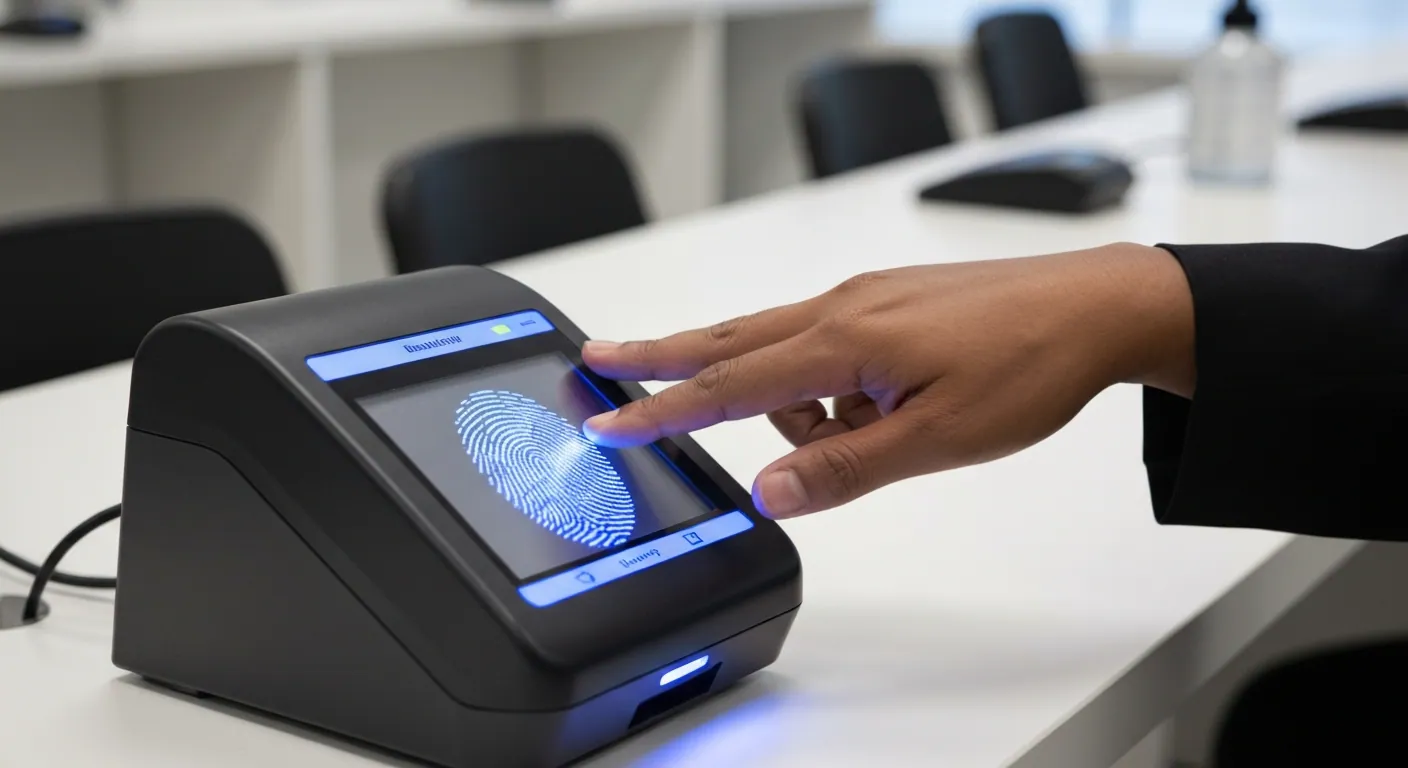
All new applicants for all grant types must now undergo biometric verification. This means fingerprint scanning and facial recognition, matched against Department of Home Affairs records. The system is designed to prevent identity fraud, where someone applies using another person's ID number.
For existing beneficiaries placed under review, the process requires an in-person visit to a SASSA office with your ID document and supporting paperwork. The agency verifies your identity biometrically and then re-assesses your eligibility based on the latest data from its partner databases.
Why Biometrics Now?
SASSA's allocation for 2025/26 was made conditional by National Treasury on the agency improving its verification processes. Treasury effectively told SASSA: tighten compliance or face budget consequences. The result has been the most aggressive review programme in the agency's history, with Finance Minister Godongwana projecting R3 billion in savings over the medium term from enhanced targeting.
201,000 State Employees: The Ghost Grant Problem
Perhaps the most striking finding from the crackdown is the 201,000 people identified through government payroll data as potentially receiving grants while employed by the state. If confirmed, these cases represent straightforward fraud: government employees collecting social grants they do not qualify for.
The scale of this problem suggests systemic gaps in how government departments communicate with each other. Until the current data-matching programme, there was no automated cross-reference between the state payroll and the SASSA beneficiary database. That has now changed.
Sliding Scale Adjustments
Not all flagged beneficiaries had their grants cancelled. For 8,599 disability and old age grant recipients, grant amounts were adjusted under the income sliding scale. This means their income was found to be higher than initially declared, but not high enough to disqualify them entirely. Their grants were reduced to a level that matches their actual means.
The Fiscal Impact
The numbers are significant. The 70,000 suspensions and 34,661 cancellations are generating immediate savings, while the broader programme is expected to yield cumulative savings of R3 billion over the medium-term expenditure framework.
| Savings Category | Amount | Timeframe |
|---|---|---|
| Monthly savings from reviews | R44 million | Per month (ongoing) |
| Annualised review savings | ~R500 million | Per year |
| Savings from grant adjustments | R36.4 million | 2025/26 |
| Savings from cancellations | R170.7 million | By end 2025/26 |
| Medium-term projected savings | R3 billion | Over MTEF period |
What to Do If Your Grant Is Affected
If your grant has been suspended or you have received a notification to present yourself for review, do not wait. The longer you delay, the longer your payments remain frozen.
Your Action Plan
If You Are Legitimately Eligible
Do not panic. The review process is designed to confirm your eligibility, not to punish you. If your circumstances have not changed and you qualify under the means test, your grant will be reinstated after verification. SASSA CEO Matlou acknowledged the cooperation of beneficiaries who have come forward and completed the process. The agency has stated that legitimate beneficiaries will not lose their grants permanently.